Irregular periods are common among women, but irregular periods do not always mean PCOS. Many women experience delayed, early, missed, or unpredictable periods even when they do not have Polycystic Ovary Syndrome (PCOS). (Best Gynecologist in Indore)
Your menstrual cycle can be affected by several factors, including stress, changes in weight, thyroid problems, hormonal fluctuations, excessive exercise, nutritional deficiencies, certain medications, and other gynecological conditions.
If your periods have suddenly become irregular or the pattern continues for several months, it is important to understand the possible cause rather than assuming that you have PCOS.
What Are Irregular Periods?
A menstrual cycle does not have to occur on exactly the same date every month. However, significant changes in the timing, duration, or flow of periods may indicate an irregular menstrual cycle.
You may have irregular periods if:
- Your periods come much earlier or later than usual.
- You frequently skip periods.
- Your cycle length changes considerably from month to month.
- Your periods suddenly become very heavy or unusually light.
- You experience spotting between periods.
- Your previously regular periods become unpredictable.
Occasional changes can happen, but persistent irregular periods deserve medical evaluation.
Does an Irregular Period Always Mean PCOS?
No.
PCOS is one possible cause of irregular periods, but it is not the only one. Some women with irregular cycles do not have PCOS at all.
The menstrual cycle depends on a complex interaction between the brain, pituitary gland, ovaries, thyroid gland, and other hormones. Problems affecting any part of this system can sometimes change your cycle.
This is why it is important to identify the underlying cause instead of self-diagnosing PCOS based only on irregular periods.
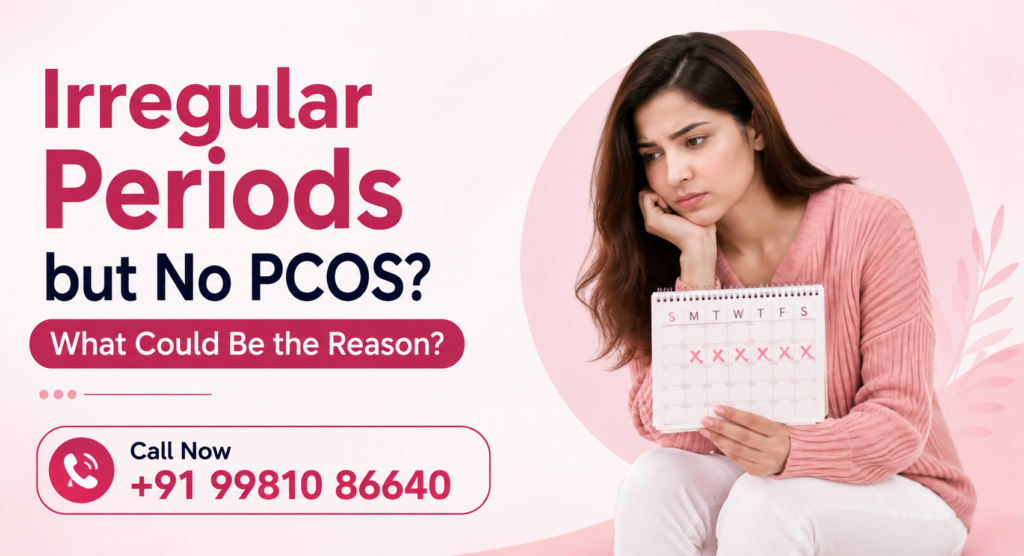
Common Reasons for Irregular Periods Without PCOS
1. Stress
Physical or emotional stress can affect the hormones responsible for ovulation.
Work pressure, relationship problems, lack of sleep, anxiety, or major life changes may sometimes cause periods to become delayed or irregular.
If your cycle changed during a particularly stressful period, stress may be one contributing factor.
2. Thyroid Problems
The thyroid gland plays an important role in regulating several body functions, including reproductive hormones.
Both an underactive thyroid and an overactive thyroid can affect menstruation.
Possible symptoms may include:
- Changes in weight
- Fatigue
- Changes in mood
- Hair changes
- Increased sensitivity to cold or heat
- Changes in menstrual flow
A doctor may recommend thyroid testing when the symptoms and menstrual history suggest a possible thyroid problem.
3. Sudden Weight Changes
Rapid weight gain or weight loss can affect ovulation.
Very low body weight may reduce reproductive hormone production, while significant weight gain can also influence hormonal balance.
Maintaining a healthy and sustainable lifestyle is important for reproductive health.
4. Excessive Exercise
Regular physical activity is beneficial, but intense exercise combined with inadequate calorie intake can sometimes interfere with normal ovulation.
Women involved in very demanding training or sports may experience delayed or missed periods.
5. Perimenopause
As women approach menopause, hormone levels can naturally become less predictable.
This transitional stage is called perimenopause. During this time, periods may become:
- More frequent
- Less frequent
- Heavier
- Lighter
- Longer or shorter
Perimenopause commonly occurs in the 40s, although the timing varies from woman to woman.
6. High Prolactin Levels
Prolactin is a hormone produced by the pituitary gland. Higher-than-normal prolactin levels can interfere with ovulation and menstruation.
Some women may also notice breast discharge unrelated to breastfeeding.
If your doctor suspects elevated prolactin, a blood test may be recommended.
7. Poor Nutrition
Your body needs adequate calories, protein, vitamins, minerals, and other nutrients for normal hormonal function.
Restrictive diets, eating disorders, or inadequate nutrition may contribute to menstrual irregularities.
8. Certain Medications
Some medications can affect menstrual cycles as a side effect.
If your periods became irregular after starting a new medication, discuss the change with your doctor rather than stopping the medicine on your own.
9. Uterine or Ovarian Conditions
Certain gynecological conditions can affect bleeding patterns.
For example, fibroids, adenomyosis, endometriosis, ovarian cysts, or other uterine conditions may sometimes cause changes in menstrual bleeding.
The symptoms can vary depending on the underlying condition.
10. Pregnancy
If you are sexually active and your period is late, pregnancy should be considered—even if your cycles are usually irregular.
A pregnancy test may be recommended depending on your circumstances.
When Should You See a Gynecologist?
You should consider consulting a gynecologist if irregular periods are persistent, recurring, or accompanied by other symptoms.
Seek medical advice if:
- You repeatedly miss periods.
- Your periods have suddenly become irregular.
- You have very heavy menstrual bleeding.
- You experience bleeding between periods.
- You have significant pelvic pain.
- You have difficulty becoming pregnant.
- You notice unusual breast discharge.
- You have symptoms suggesting thyroid or hormonal problems.
A Best Gynecologist in Indore can evaluate your menstrual history, symptoms, medical history, and other factors to help identify the possible cause.
How Are Irregular Periods Evaluated?
Your evaluation depends on your age, symptoms, menstrual history, and overall health.
Your gynecologist may ask about:
- Your usual cycle length
- Date of your last period
- Duration and amount of bleeding
- Weight changes
- Stress and sleep
- Medications
- Pregnancy possibility
- Other symptoms
- Fertility concerns
Depending on your symptoms, your doctor may recommend tests such as pregnancy testing, thyroid testing, hormone tests, or an ultrasound.
Not every woman needs every test. Investigations should be based on individual symptoms and clinical evaluation.
Can Irregular Periods Be Treated?
Treatment depends entirely on the underlying cause.
For example, management may involve addressing thyroid problems, improving nutrition, managing excessive exercise, treating certain gynecological conditions, or correcting specific hormonal problems.
If stress or lifestyle factors are contributing to irregular cycles, improving sleep, nutrition, physical activity, and stress management may also help.
The important point is that irregular periods should not automatically be treated as PCOS. The correct treatment depends on the actual cause.
Keep Track of Your Menstrual Cycle
One simple step you can take is to track your periods.
Record:
- First day of each period
- Number of days of bleeding
- Approximate flow
- Spotting
- Pain or cramps
- Other unusual symptoms
A period-tracking app or simple calendar can make it easier to identify changes and provide useful information during your gynecological consultation.
Final Thoughts – Best Gynecologist in Indore
Irregular periods can happen for many reasons, and PCOS is only one possible explanation. Stress, thyroid disorders, weight changes, excessive exercise, nutritional problems, hormonal changes, medications, pregnancy, and gynecological conditions can also affect the menstrual cycle.
If your periods remain irregular or you notice other concerning symptoms, it is better to get evaluated rather than trying to determine the cause yourself.
If you are looking for a Best Gynecologist in Indore for menstrual or hormonal concerns, a proper consultation can help determine the cause and guide appropriate treatment.
Frequently Asked Questions
1. Can I have irregular periods without having PCOS?
Yes. Irregular periods can occur due to stress, thyroid problems, weight changes, excessive exercise, hormonal changes, medications, pregnancy, and several other causes.
2. Does every woman with irregular periods need an ultrasound?
Not necessarily. The need for an ultrasound depends on your symptoms, age, medical history, examination findings, and your doctor’s assessment.
3. Can stress make periods irregular?
Yes. Significant physical or emotional stress can affect the hormones involved in ovulation and may lead to delayed or missed periods.
4. When should irregular periods be checked by a gynecologist?
If irregularity is persistent, recurring, or associated with heavy bleeding, pelvic pain, unusual discharge, fertility concerns, or other symptoms, you should consult a gynecologist.
5. Can irregular periods affect fertility?
They can sometimes indicate irregular or absent ovulation, which may make conception more difficult. The effect depends on the underlying cause. – Best Gynecologist in Indore