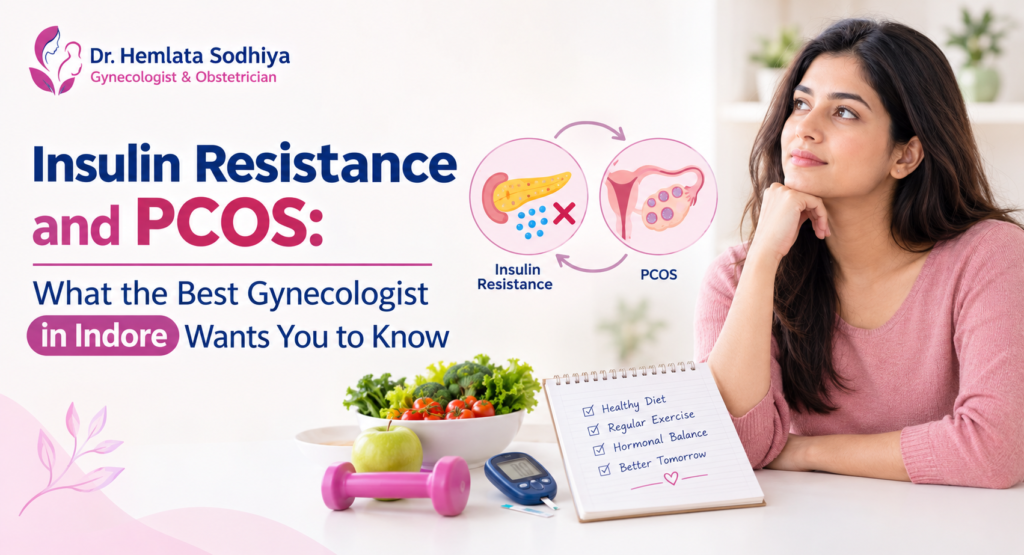
Polycystic ovary syndrome (PCOS) is one of the most common hormonal conditions affecting women of reproductive age. While PCOS is often associated with irregular periods, acne, unwanted hair growth and difficulty with weight management, there is another important factor that many women may not know about: insulin resistance.
Insulin resistance and PCOS can be closely connected. Understanding this relationship can help women recognize symptoms earlier and take appropriate steps toward better hormonal and metabolic health.
If you have PCOS or symptoms that concern you, consulting the Best Gynecologist in Indore can help you understand your condition and develop an individualized management plan.
What Is Insulin Resistance?
Insulin is a hormone produced by the pancreas. It helps the body’s cells take glucose from the blood and use it for energy.
Insulin resistance occurs when the body’s cells do not respond effectively to insulin. To compensate, the pancreas may produce more insulin to help maintain blood glucose levels.
Over time, insulin resistance can be associated with an increased risk of conditions such as prediabetes and type 2 diabetes.
Insulin resistance can occur in people with or without PCOS, but it is particularly relevant when managing PCOS.
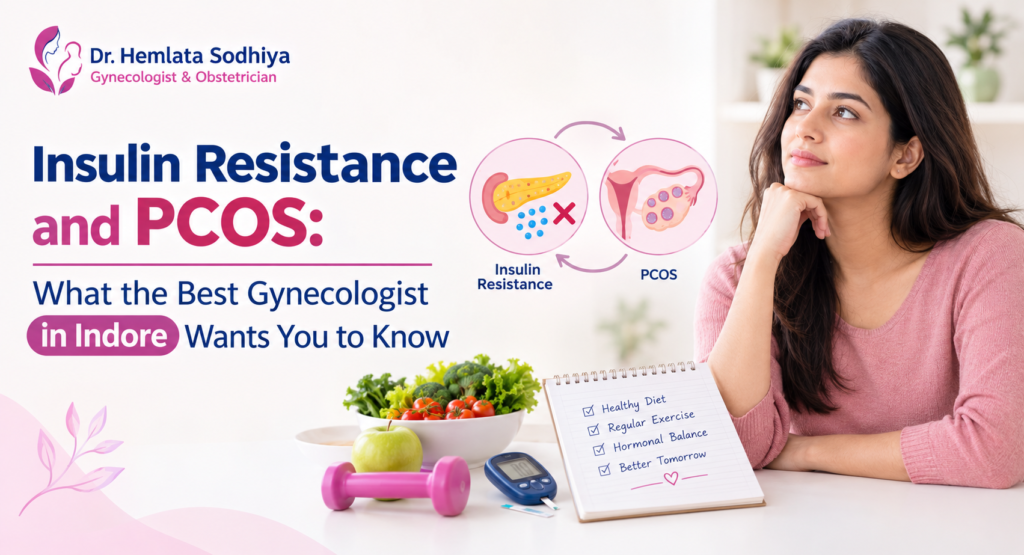
How Are Insulin Resistance and PCOS Connected?
The relationship between PCOS and insulin resistance is complex.
Higher insulin levels may contribute to increased production of androgens, commonly referred to as male hormones. In some women with PCOS, elevated androgen levels can contribute to symptoms such as:
- Irregular or missed periods
- Difficulty with ovulation
- Acne
- Increased facial or body hair
- Hair thinning or scalp hair loss
- Difficulty managing weight
At the same time, PCOS itself can be associated with metabolic changes, making insulin resistance an important part of the overall health assessment.
However, not every woman with PCOS has insulin resistance, and insulin resistance is not required for a diagnosis of PCOS.
Common Signs That May Need Attention
Insulin resistance does not always cause obvious symptoms. Some women may have no noticeable signs.
However, certain findings can suggest that metabolic health deserves further evaluation, including:
- Increased difficulty managing weight
- Increased waist circumference
- Irregular menstrual cycles
- Darkened, thickened skin in areas such as the neck or armpits
- Increased hunger or cravings in some individuals
- A personal or family history of diabetes
- PCOS combined with other metabolic risk factors
These symptoms do not confirm insulin resistance on their own. Proper evaluation is important.
Why Does Insulin Resistance Matter in PCOS?
Insulin resistance is important because PCOS can involve both reproductive and metabolic health.
Women with PCOS may have an increased risk of developing impaired glucose regulation and other metabolic risk factors. This means that managing PCOS is not simply about getting regular periods or treating acne.
A comprehensive approach may also consider:
- Blood glucose regulation
- Blood pressure
- Cholesterol and other lipid levels
- Body weight and waist circumference
- Menstrual health
- Ovulation and fertility goals
- Long-term metabolic health
The Best Gynecologist in Indore can help determine which aspects of your health need attention based on your individual symptoms and risk factors.
How Is Insulin Resistance Evaluated?
There is no single test that universally confirms insulin resistance in every person.
Depending on your symptoms and medical history, your doctor may recommend tests to assess glucose metabolism and overall metabolic health. These may include:
- Fasting blood glucose
- HbA1c
- Oral glucose tolerance testing in selected situations
- Lipid profile
- Other investigations based on individual risk factors
Your doctor will decide which tests are appropriate rather than relying on one result alone.
Can Insulin Resistance Make PCOS Symptoms Worse?
In some women, higher insulin levels can contribute to increased androgen activity, which may affect ovulation and contribute to symptoms associated with PCOS.
However, PCOS is a complex condition with several possible contributing factors. Hormonal changes, genetics, body composition, lifestyle and other metabolic factors can all play a role.
This is why treatment should be individualized rather than based on a single symptom.
Lifestyle Management and PCOS
Lifestyle changes are an important part of PCOS management, particularly when insulin resistance or metabolic risk factors are present.
1. Choose a Balanced Diet
Focus on a sustainable eating pattern that includes vegetables, fruits, whole grains, protein sources, healthy fats and high-fiber foods.
Reducing excessive intake of highly processed foods and added sugars may also support overall metabolic health.
There is no single “PCOS diet” that works for everyone. A practical and sustainable approach is usually more useful than an extremely restrictive diet.
2. Stay Physically Active
Regular physical activity can support insulin sensitivity, cardiovascular health and overall well-being.
Activities can include:
- Walking
- Strength training
- Cycling
- Swimming
- Yoga
- Other enjoyable forms of exercise
Consistency is more important than choosing a particular type of exercise.
3. Focus on Sustainable Weight Management
For women who are overweight, even modest weight loss may improve some metabolic and reproductive outcomes. However, PCOS can also occur in women who are not overweight.
Therefore, PCOS management should never focus only on the number on the weighing scale.
4. Prioritize Sleep
Poor sleep and chronic stress can affect overall metabolic and hormonal health. Maintaining a regular sleep routine and managing stress can be useful parts of a healthy lifestyle.
Can Medicines Help?
Depending on your symptoms and goals, your gynecologist may recommend medication.
Treatment can vary depending on whether your main concern is:
- Irregular periods
- Acne or unwanted hair growth
- Insulin resistance or metabolic risk
- Difficulty with ovulation
- Fertility
- Prevention of complications associated with prolonged irregular periods
Certain medicines, including insulin-sensitizing medications, may be appropriate for some women, but they are not necessary for everyone with PCOS.
Do not start or stop medication without discussing it with your doctor.
PCOS and Fertility
PCOS can interfere with regular ovulation, which may make conception more difficult for some women. However, having PCOS does not mean that pregnancy is impossible.
If pregnancy is your goal, a gynecologist can assess your menstrual pattern, ovulation and other fertility factors and recommend an appropriate treatment approach.
If you are planning pregnancy and have PCOS, seeking advice from the Best Gynecologist in Indore can help you understand your options and prepare for a healthy pregnancy.
When Should You Consult a Gynecologist?
You should consider seeing a gynecologist if you experience:
- Periods that are consistently irregular
- Very long gaps between periods
- Excessive facial or body hair
- Persistent acne
- Unexplained hair thinning
- Difficulty with ovulation or conception
- Significant changes in weight
- Symptoms suggesting possible metabolic problems
- A history of PCOS with concerns about long-term health
Early evaluation can help identify your individual risk factors and provide appropriate guidance.
Takeaway
Insulin resistance and PCOS can be closely associated, but they are not the same condition and not every woman with PCOS has insulin resistance.
Managing PCOS involves looking beyond menstrual symptoms and considering reproductive, hormonal and metabolic health together. A healthy lifestyle, appropriate monitoring and individualized medical treatment can help manage symptoms and reduce potential long-term risks.
If you have irregular periods, symptoms of PCOS, or concerns about insulin resistance, consult the Best Gynecologist in Indore for a proper evaluation and personalized guidance.
Frequently Asked Questions
1. Does every woman with PCOS have insulin resistance?
No. Insulin resistance is common in PCOS but does not occur in every woman with the condition.
2. Can insulin resistance cause PCOS?
Insulin resistance is considered one factor that can contribute to the hormonal and metabolic features associated with PCOS, but PCOS has multiple contributing factors, including genetics and hormonal changes.
3. Can lifestyle changes help with PCOS?
Yes. Regular physical activity, a balanced diet, adequate sleep and sustainable weight management when appropriate can support metabolic and reproductive health.
4. Can PCOS affect fertility?
PCOS can affect ovulation and may make conception more difficult for some women. However, many women with PCOS can become pregnant with appropriate care and treatment.
5. When should I see the Best Gynecologist in Indore for PCOS?
Consider consulting a gynecologist if you have persistent irregular periods, signs of excess androgen activity, fertility concerns, or other symptoms associated with PCOS. A doctor can assess your symptoms and recommend appropriate testing and treatment.