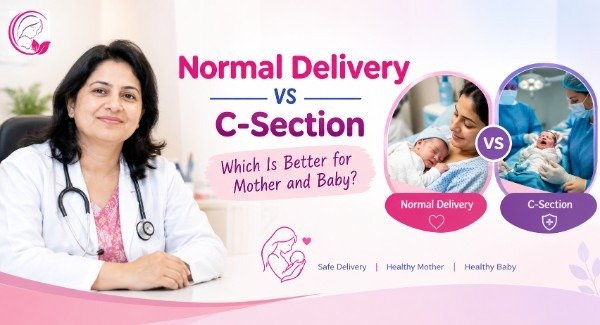
Normal Delivery vs C-Section: Which Is Better for Mother and Baby?
Pregnancy is a beautiful journey, but it can also bring many questions to a mother’s mind. One of the most common questions is: “Should I have a normal delivery or a C-section?” Some mothers hope for a normal delivery. Others may be worried about labour pain or may need a C-section because of a medical reason. The truth is that both normal delivery and C-section can be safe ways to welcome a baby. The best option depends on the health of the mother, the baby’s position, and how the pregnancy is progressing. If you are looking for a Gynecologist in Old Palasia, understanding these two delivery methods can help you feel more prepared and confident. Let’s explain everything in simple words. 1. What Is Normal Delivery? Normal delivery, also called vaginal delivery, is when a baby is born through the mother’s vagina. During labour, the mother’s womb starts to tighten. These tightening movements are called contractions. They help the opening of the womb become wider so the baby can move down and be born. A normal delivery usually includes three main stages: The doctor and healthcare team support the mother throughout labour and delivery. After a vaginal delivery, many mothers can start moving around sooner, depending on how the birth went and how they feel. 2. What Is a C-Section Delivery? A C-section, also called a cesarean delivery, is a surgery in which the doctor helps the baby come out through a cut made in the mother’s abdomen and womb. A C-section may be planned before labour or may be needed during labour if a medical concern develops. Doctors may recommend a C-section for reasons such as: A C-section is a common and important medical procedure. It can protect the health of both mother and baby when vaginal delivery is not the safest option. 3. Normal Delivery vs C-Section: What Is the Difference? Both delivery methods help bring your baby into the world, but they are different. Normal Delivery C-Section Baby is born through the vagina. Baby is born through surgery. Labour contractions usually happen. Labour may or may not happen before surgery. Recovery is often quicker. Recovery usually takes longer because it is surgery. May cause vaginal soreness or tears. May cause pain around the surgical cut. Surgery is not usually needed. Requires an operation and anaesthesia. The right delivery method is not the same for every mother. A Gynecologist in Old Palasia can assess your pregnancy and explain which option may be safest for you and your baby. 4. Which Is Better for the Mother? Many women ask whether normal delivery is better for the mother. For women who are suitable for vaginal birth, normal delivery often has some benefits: However, normal delivery can also involve labour pain, vaginal soreness, and sometimes tears or other complications. A C-section may be the safer choice when there is a medical reason. But because it is surgery, it has risks such as infection, bleeding, blood clots, and a longer recovery period. The most important thing is not choosing one method simply because it sounds easier. It is choosing the safest option for the mother’s health. 5. Which Is Better for the Baby? Both normal delivery and C-section can result in a healthy baby. During vaginal birth, the baby passes through the birth canal. Some babies born by planned C-section may have temporary breathing difficulties after birth, especially if delivered before 39 weeks without a medical reason. However, when a C-section is medically needed, it can prevent serious problems for the baby. For example, if the baby is in distress or the placenta is blocking the birth canal, a C-section may be the safest way to deliver. Your doctor will monitor the baby’s growth, position, and heartbeat during pregnancy and labour to help guide the delivery plan. 6. Can Every Woman Have a Normal Delivery? No. Every pregnancy is different. Some women may be suitable for normal delivery, while others may need a C-section. Factors that can affect the delivery method include: Even if a woman plans for normal delivery, the plan may need to change during labour if the mother or baby needs medical help. This does not mean the mother has failed. The goal is always a safe delivery. 7. Can You Have a Normal Delivery After a C-Section? Some women who have had a previous C-section may be able to have a vaginal birth in a later pregnancy. This is called VBAC, or vaginal birth after cesarean. However, VBAC is not suitable for everyone. Your doctor will consider the type of cut made in your womb during the previous surgery, the reason for the earlier C-section, your current pregnancy, and whether emergency C-section facilities are available. Talk to your Gynecologist in Old Palasia early in pregnancy if you have had a previous C-section. This gives you time to understand your options. 8. How Can You Prepare for a Healthy Delivery? Although no one can guarantee a normal delivery, healthy habits can support your pregnancy. Here are some simple tips: Attend regular pregnancy checkups Keep your appointments so your doctor can monitor your health and your baby’s growth. Eat healthy food Include vegetables, fruits, whole grains, pulses, and protein-rich foods in your meals. Stay active if your doctor allows Walking and other suitable activities may help you stay active during pregnancy. Ask your doctor which exercises are safe for you. Take medicines and supplements as advised Do not take medicines or supplements without checking with your doctor. Learn about labour Understanding the signs of labour can help you feel more prepared. Ask your doctor when you should go to the hospital. 9. When Should You Consult a Gynecologist? You should contact your doctor if you have questions about your delivery plan or experience any concerning symptoms. Seek urgent medical care if you have: If you are pregnant and looking for a Gynecologist in Old Palasia, an early consultation can help you understand your pregnancy, delivery options, and the care