
Pregnancy After 35? When Should You Consult the Best Gynecologist in Indore?

Pregnancy after the age of 35 is becoming increasingly common. Many women choose to focus on their careers, relationships, financial stability, or personal goals before starting or expanding their families. While a healthy pregnancy is absolutely possible after 35, fertility gradually declines with age and certain pregnancy-related risks can become more important to monitor. This is why pre-pregnancy counselling and timely prenatal care are especially important after 35. Consulting an experienced gynecologist can help you understand your individual health profile, plan appropriate tests, and receive personalized pregnancy care. Is Pregnancy After 35 Safe? Yes. Being over 35 does not mean that you cannot have a healthy pregnancy. However, age is one factor that doctors consider when assessing pregnancy. The likelihood of some complications, including high blood pressure during pregnancy, gestational diabetes and certain chromosomal conditions, increases with maternal age. Your overall health, medical history, previous pregnancies, lifestyle and fertility status are also important. Therefore, pregnancy care should be individualized rather than based on age alone. When Should You Consult a Gynecologist? Ideally, don’t wait until you get a positive pregnancy test. If you are planning pregnancy after 35, consider scheduling a pre-pregnancy consultation before trying to conceive. ACOG recommends pre-pregnancy care to identify health conditions, review medications, update vaccinations and discuss lifestyle and pregnancy-related risk factors. An early consultation is particularly helpful if you have: Why Does Fertility Decline After 35? Female fertility naturally decreases with age, largely because the number and quality of eggs decline over time. If you are 35 or older and have been trying to conceive for 6 months without success, it is generally advisable to seek an evaluation rather than waiting a full year. Women aged 40 and above may benefit from seeking fertility advice even sooner. An evaluation can help identify possible causes and determine whether you may benefit from fertility treatment or specialist care. What Happens During Pre-Pregnancy Counselling? A pre-pregnancy consultation can help you prepare your body and health for pregnancy. Your gynecologist may discuss: ACOG notes that pre-pregnancy care can be started several months before trying to conceive, giving you time to address health concerns and optimize your pregnancy preparation. What Extra Monitoring May Be Needed After 35? Not every woman over 35 requires the same tests or additional appointments. Your doctor will determine your care based on your individual risk factors. Depending on your circumstances, your pregnancy care may include closer monitoring of: Blood Pressure Age 35 or older is one of the factors associated with a higher risk category for preeclampsia. Regular blood pressure monitoring during pregnancy is therefore important. Blood Sugar The risk of gestational diabetes can increase with certain maternal factors, including age. Your doctor may recommend appropriate screening during pregnancy. Baby’s Growth and Development Routine ultrasound examinations help monitor pregnancy development and fetal growth. Additional scans may be recommended when medically indicated. Genetic Screening Pregnancy after 35 may prompt more detailed discussions about prenatal genetic screening. Current ACOG guidance states that prenatal genetic screening and diagnostic testing options should be discussed and offered to all pregnant patients, rather than being limited only to women of a particular age. Screening options can include blood-based screening and ultrasound, while diagnostic tests such as chorionic villus sampling (CVS) or amniocentesis can provide more definitive information about certain genetic conditions. When Should You See the Best Gynecologist in Indore? If you are searching for the best gynecologist in Indore for pregnancy after 35, look for a doctor who provides comprehensive pre-pregnancy counselling, pregnancy monitoring and individualized care. It is particularly important to consult a gynecologist if: An early consultation can help you understand your options and create a pregnancy care plan suited to your needs. Tips for a Healthy Pregnancy After 35 Age is only one part of the pregnancy picture. You can support a healthy pregnancy by: Final Takeaway Pregnancy after 35 can be a healthy and rewarding experience, but planning and appropriate medical care are important. If you are considering pregnancy after 35, consulting a gynecologist before conception can help identify potential concerns, optimize your health and prepare you for pregnancy. If you have already conceived, scheduling your first prenatal appointment early can help establish appropriate care and monitoring. ACOG recommends early pregnancy assessment so that risk factors and care needs can be addressed as soon as possible. If you are looking for the best gynecologist in Indore for pre-pregnancy counselling, infertility concerns or pregnancy care after 35, choose a qualified obstetrician-gynecologist who can provide personalized guidance throughout your pregnancy journey. Frequently Asked Questions Q. Can I have a normal pregnancy after 35?Yes. Many women have healthy pregnancies after 35. However, some pregnancy risks increase with age, so individualized prenatal care is important. Q. How long should I try to conceive after 35 before seeing a doctor?If you are 35 or older, it is generally recommended to seek fertility evaluation after 6 months of trying without pregnancy. If you are 40 or older, consider consulting a fertility specialist sooner. Q. Should I consult a gynecologist before getting pregnant after 35?Yes. Pre-pregnancy counselling can help identify medical or lifestyle factors that may affect pregnancy and allows you to prepare before conception. Q. Is genetic testing necessary after 35?Your doctor can explain available prenatal screening and diagnostic testing options. The choice depends on your individual circumstances and preferences. ACOG states that prenatal genetic screening and diagnostic testing options should be discussed and offered to all pregnant patients. Medical Disclaimer: This article is intended for general educational purposes and does not replace personalized medical advice, diagnosis or treatment. Every pregnancy is different. Consult a qualified gynecologist for advice based on your medical history and individual needs.
Best Gynecologist in Indore: When Should You See a Gynecologist?
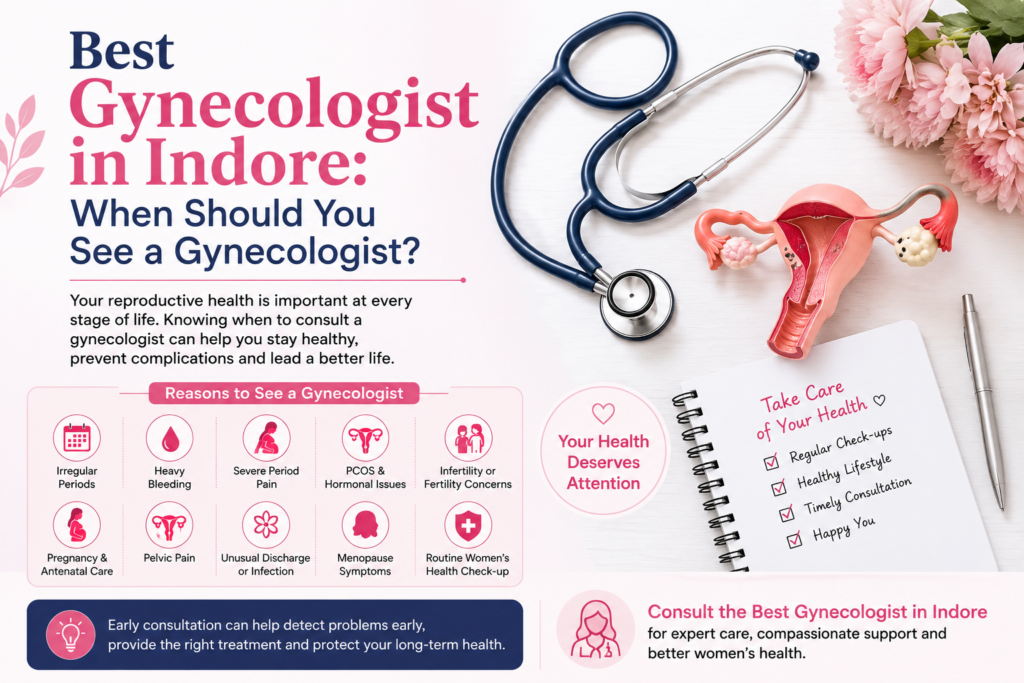
Introduction Women’s health changes throughout different stages of life. From the first menstrual cycle to pregnancy, fertility, menopause and beyond, regular attention to reproductive and hormonal health can help women understand their bodies and address concerns at the right time. Many women are unsure about when they should visit a gynecologist. Some wait until symptoms become severe, while others may not know whether a particular change requires medical attention. If you are looking for the Best Gynecologist in Indore, understanding when to schedule an appointment is an important first step. A gynecologist can evaluate menstrual concerns, PCOS, pelvic pain, pregnancy-related issues, fertility problems, menopause symptoms and many other women’s health conditions. When Should You See a Gynecologist? There is no single reason to visit a gynecologist. You may need an appointment because of a specific symptom, for pregnancy care, fertility planning or routine women’s healthcare. Here are some common situations when consulting a gynecologist may be appropriate. 1. Irregular Periods Menstrual cycles can vary, but persistent changes in your normal cycle may require evaluation. You should consider consulting the Best Gynecologist in Indore if your periods are frequently: Irregular periods can have several possible causes, including hormonal changes, PCOS, thyroid-related conditions, stress and other health issues. A gynecologist can assess your symptoms and determine whether further evaluation is needed. 2. Severe Period Pain Some menstrual discomfort can be common, but severe or worsening pain should not simply be ignored. If period pain interferes with your work, studies, sleep or daily activities, consider consulting a gynecologist. Conditions such as endometriosis, fibroids or other gynecological problems can sometimes cause significant pelvic or menstrual pain. The Best Gynecologist in Indore can review your symptoms and medical history and recommend appropriate evaluation when required. 3. Very Heavy Menstrual Bleeding Heavy menstrual bleeding can affect your quality of life and, in some cases, may contribute to anemia. If you regularly need to change menstrual products very frequently, experience prolonged bleeding or feel unusually tired during or after your periods, it is advisable to discuss these symptoms with a healthcare professional. A gynecologist can help determine the possible cause and discuss suitable treatment options. 4. Symptoms of PCOS or Hormonal Imbalance PCOS is a common hormonal and reproductive health condition. Symptoms may include irregular periods, acne, increased facial or body hair, scalp hair thinning and difficulty with ovulation. If you notice several of these symptoms, consulting the Best Gynecologist in Indore can help determine whether you need an evaluation. A proper diagnosis should be based on your medical history, symptoms, examination and appropriate investigations rather than on one symptom alone. 5. Difficulty Becoming Pregnant If you have been trying to conceive without success, a gynecologist can help evaluate possible factors affecting fertility. A fertility evaluation may consider menstrual and ovulation patterns, medical history and other relevant factors. Depending on the circumstances, additional investigations or referral to a fertility specialist may be recommended. Women planning pregnancy may also benefit from a preconception consultation to discuss general health, medications, lifestyle and pregnancy planning. 6. Pregnancy Care Pregnancy is another important reason to consult an obstetrician or gynecologist. Once pregnancy is confirmed, appropriate antenatal care helps monitor the health of both mother and baby. Your doctor can advise you about recommended check-ups, investigations, nutrition, supplements, vaccinations and other aspects of pregnancy care. Women with previous pregnancy complications or medical conditions may require additional monitoring. If you are searching for the Best Gynecologist in Indore for pregnancy care, consider the doctor’s obstetric experience and access to appropriate hospital and emergency facilities. 7. Pelvic Pain Persistent pelvic or lower abdominal pain should not be ignored, particularly when it is new, severe or associated with other symptoms. Pelvic pain can have several possible causes. A gynecologist can assess the location, duration and nature of the pain and determine whether investigations such as an ultrasound or laboratory tests may be appropriate. If pelvic pain is sudden and severe or occurs with other concerning symptoms, prompt medical assessment may be necessary. 8. Unusual Vaginal Discharge or Discomfort Changes in vaginal discharge can sometimes occur because of infections or other conditions. Consult a gynecologist if you experience persistent or unusual discharge, unpleasant odor, itching, burning, irritation or discomfort. Avoid self-treating recurrent symptoms without understanding the underlying cause. A medical evaluation can help identify whether treatment is necessary. 9. Menopause Symptoms Menopause is a natural stage of life, but symptoms can sometimes interfere with everyday activities. Women experiencing irregular periods, hot flashes, night sweats, sleep difficulties, vaginal dryness or other persistent symptoms may benefit from speaking with a gynecologist. A gynecologist can discuss lifestyle measures and appropriate treatment options based on your symptoms, age and overall health. 10. Concerns About Fertility or Reproductive Health You do not have to wait until you are trying to conceive to discuss reproductive health. If you have questions about fertility, menstrual health, contraception, PCOS, previous gynecological conditions or pregnancy planning, a consultation with the Best Gynecologist in Indore can provide an opportunity to discuss your individual needs. What Happens During a Gynecology Appointment? Your appointment will generally begin with a discussion about your symptoms and medical history. Depending on your concerns, the doctor may ask about: Depending on the situation, your doctor may recommend an examination, blood tests, ultrasound or other investigations. Not every woman needs the same tests or examination. Your evaluation should be based on your individual symptoms and healthcare needs. How to Choose the Best Gynecologist in Indore When searching for the Best Gynecologist in Indore, consider more than online ratings. Qualifications and Experience Check the doctor’s qualifications and experience in Obstetrics and Gynecology. If you need specialized care, consider relevant expertise in pregnancy, infertility, PCOS, laparoscopic procedures or other areas. Communication Choose a doctor who listens to your concerns and explains your condition and treatment options clearly. Appropriate Facilities For pregnancy, surgery or complex conditions, consider whether the doctor has access to appropriate diagnostic and hospital facilities. Patient Comfort Gynecology involves discussing personal health concerns.