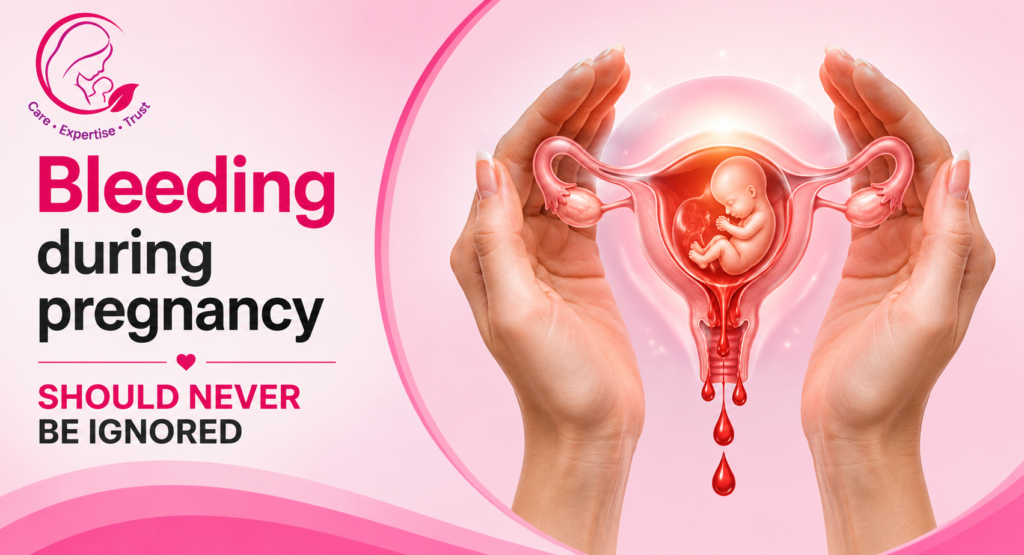
Bleeding during early pregnancy can be frightening, especially when you are eagerly waiting for your baby’s arrival. However, vaginal bleeding in the first trimester does not always mean that something is wrong. Light spotting can occur for several reasons, and many women who experience early pregnancy bleeding continue to have healthy pregnancies.
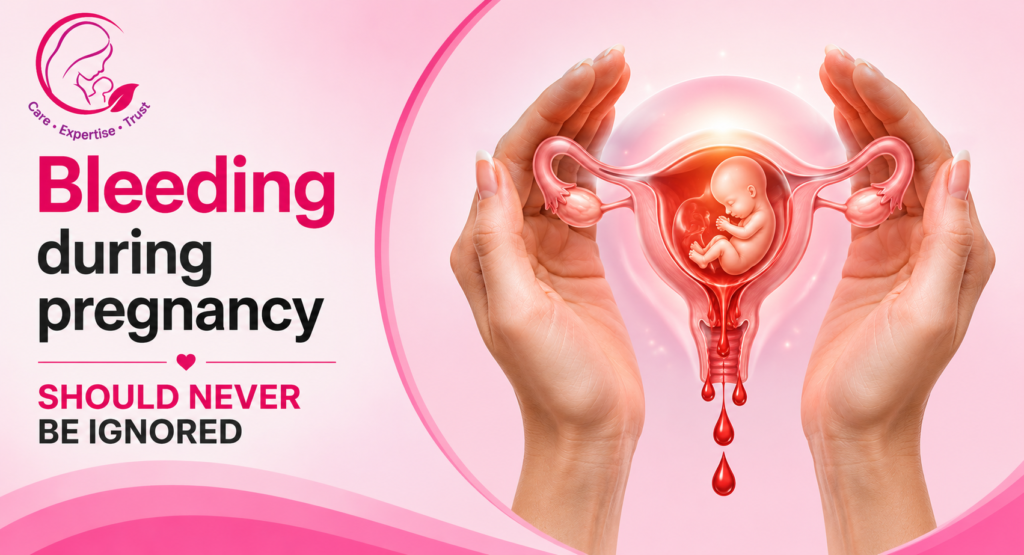
At the same time, bleeding during pregnancy should never be ignored. Certain patterns of bleeding, especially when accompanied by pain or dizziness, may require prompt medical evaluation.
What Is Considered Early Pregnancy Bleeding?
Early pregnancy generally refers to the first 12 weeks of pregnancy. Bleeding may range from a few spots of pink, brown or red blood on underwear or toilet paper to heavier bleeding that requires a sanitary pad.
The bleeding may occur once, continue for several hours, or come and go. The amount, colour, duration and associated symptoms can help your gynecologist understand what may be causing it.
Common Causes of Bleeding in Early Pregnancy
There are several possible reasons for bleeding during the first trimester.
1. Implantation-Related Bleeding
Very light spotting can sometimes occur around the time the fertilized egg attaches to the uterine lining. This generally happens very early in pregnancy.
2. Changes in the Cervix
Pregnancy increases blood flow to the cervix, making it more sensitive. Some women may notice spotting after sexual intercourse or a vaginal examination.
3. Infection
Certain vaginal, cervical or urinary infections can sometimes cause bleeding or spotting and may require treatment.
4. Miscarriage
Bleeding can sometimes be a sign of miscarriage, particularly when it is accompanied by cramping, abdominal pain, passage of tissue or increasing bleeding. However, bleeding alone does not necessarily mean that a miscarriage has occurred.
5. Ectopic Pregnancy
An ectopic pregnancy occurs when the pregnancy develops outside the uterus, most commonly in a fallopian tube. Vaginal bleeding combined with abdominal or pelvic pain can be an important warning sign.
6. Molar Pregnancy
Rarely, bleeding in early pregnancy can be associated with a molar pregnancy, in which abnormal tissue develops instead of a normal pregnancy. Medical assessment is needed to determine the cause.
When Should You Seek Medical Care?
Contact your gynecologist if you experience vaginal bleeding during pregnancy, particularly if it continues or becomes heavier.
Seek urgent medical attention if you have:
- Moderate or heavy vaginal bleeding
- Bleeding accompanied by abdominal or pelvic pain
- Severe cramping
- Passage of tissue or large clots
- Fever or chills
- Severe weakness, dizziness or fainting
- Shoulder pain along with bleeding
- Severe abdominal pain
- Bleeding that quickly soaks through a sanitary pad
Severe pain, shoulder pain, dizziness or fainting together with bleeding can be warning signs of a pregnancy complication that needs immediate assessment.
What Tests May Be Needed?
Your gynecologist may recommend an evaluation based on your pregnancy stage and symptoms. This can include:
- Pregnancy-related blood tests
- Ultrasound scan
- Urine testing
- Pelvic examination when appropriate
- Assessment of the amount and pattern of bleeding
An ultrasound may help determine the location and development of the pregnancy and identify possible causes of bleeding.
What Should You Do If You Notice Spotting?
If you notice bleeding, try to note:
- When the bleeding started
- Its colour
- How much blood you are losing
- Whether you are passing clots or tissue
- Whether you have abdominal pain or cramps
- How many weeks pregnant you are
This information can help your doctor assess the situation more effectively.
If you know that you are Rh-negative, tell your healthcare professional about the bleeding, as additional management may sometimes be required.
Can Early Pregnancy Bleeding Be Normal?
Yes, light bleeding or spotting can occur during early pregnancy and does not automatically indicate pregnancy loss. However, there is no reliable way to determine the cause based only on the amount or colour of blood.
That is why it is important to discuss pregnancy bleeding with your gynecologist rather than assuming that it is either harmless or a miscarriage.
Final Takeaway
Bleeding during early pregnancy is not always a sign of danger, but it should be taken seriously. Light spotting may have a harmless cause, while heavier bleeding or bleeding accompanied by pain, dizziness, fainting or shoulder pain may require urgent medical care.
If you experience bleeding during pregnancy, especially in the first trimester, consult your gynecologist for an appropriate evaluation. Early assessment can help identify potential complications and provide reassurance when the pregnancy is progressing normally.
Frequently Asked Questions
Q. Is spotting during early pregnancy always a sign of miscarriage?
No. Spotting can occur for several reasons and does not automatically mean miscarriage. However, bleeding should be discussed with a healthcare professional.
Q. When is pregnancy bleeding an emergency?
Heavy bleeding, severe abdominal pain, shoulder pain, dizziness, fainting, or passage of tissue requires urgent medical evaluation.
Q. Should I get an ultrasound after early pregnancy bleeding?
Your gynecologist may recommend an ultrasound depending on your pregnancy stage, symptoms and medical history. It can help evaluate the pregnancy and identify possible causes of bleeding.
Q. Can I wait if the bleeding is very light?
Even light bleeding should be reported to your healthcare provider, particularly if it continues, returns, or is accompanied by pain or other symptoms.
Medical Disclaimer: This article is intended for general educational purposes and should not replace an examination or personalized medical advice. If you are pregnant and experiencing bleeding or concerning symptoms, consult a qualified gynecologist promptly.